
The Soul of Bihar: An Ultimate Guide to Authentic Litti Chokha
When you think of the rustic, smoky, and heart-warming flavors of Eastern India, one dish stands tall above the rest: Litti Chokha. More than just a meal, it is a cultural emblem of Bihar, Jharkhand, and Eastern Uttar Pradesh. Whether you are walking through the narrow lanes of Patna or visiting a high-end Bihari restaurant in Delhi, the aroma of roasted wheat balls and smoky eggplant mash is unmistakable.
In this comprehensive guide, we will dive deep into the world of Litti Chokha, exploring its humble origins, its incredible nutritional profile, and a step-by-step authentic recipe that you can recreate in your kitchen.
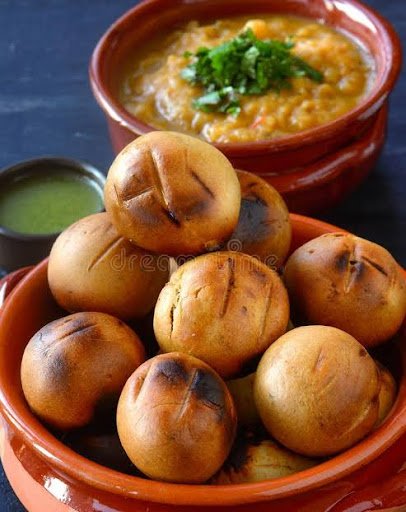
The History and Origin of Litti Chokha
The story of Litti Chokha is a tale of resilience and simplicity. Historically, it originated as a staple for farmers and laborers in the Magadh region of Bihar. Because the ingredients—whole wheat and gram flour—were affordable and had a long shelf life, it became the perfect meal for those working long hours in the fields.
Interestingly, Litti Chokha played a pivotal role during India’s struggle for independence. Tantia Tope and other freedom fighters reportedly used Litti as a “war food” because it required no oil to cook, was easy to transport, and provided sustained energy during long marches.
Over the centuries, the dish evolved from a survival meal to a royal favorite in the courts of the Mughals, and eventually, it became the globally recognized face of Bihari cuisine.
What Makes Litti Chokha Unique?
While it may look similar to Rajasthan’s Dal Baati, Litti Chokha is distinct in its preparation and flavor profile.
- The Stuffing (Sattu): Unlike Baati, which is often plain, Litti is stuffed with Sattu (roasted gram flour) mixed with pickling spices, mustard oil, lemon juice, and herbs.
- The Cooking Method: Traditional Litti is roasted over a fire of dried cow dung cakes (upla), which imparts a unique earthy, smoky aroma that an oven simply cannot replicate.
- The Side (Chokha): While Baati is paired with Dal, Litti is incomplete without Chokha—a rustic mash of roasted eggplant (baingan), tomatoes, and potatoes.
Nutritional Benefits of Litti Chokha
Many people are surprised to learn that Litti Chokha is a nutritional powerhouse. It is often referred to as a “Superfood” due to its balanced macronutrient profile.
| Component | Benefits |
| Sattu (Gram Flour) | High in plant-based protein, cooling for the body, and rich in fiber. |
| Whole Wheat | Provides complex carbohydrates for sustained energy. |
| Mustard Oil | Contains healthy fats and has antimicrobial properties. |
| Vegetables (Chokha) | Low in calories, high in vitamins, and antioxidants. |
| Desi Ghee | Aids digestion and provides fat-soluble vitamins. |
The low glycemic index of Sattu makes this dish an excellent choice for those looking to maintain steady energy levels without sugar spikes.
How to Make Authentic Litti Chokha at Home
To achieve that signature Litti Chokha taste, you need to focus on the quality of your ingredients—specifically the mustard oil and the Sattu.
Ingredients for Litti:
- For the Dough: 2 cups whole wheat flour, 1 tbsp ghee, a pinch of salt, and water.
- For the Sattu Stuffing: 1 cup Sattu, 1 finely chopped onion, 2 green chilies, 1 inch ginger (grated), 5 cloves garlic (minced), 2 tbsp mustard oil, 1 tsp kalonji (nigella seeds), 1 tsp ajwain (carom seeds), and 2 tsp of mango pickle masala.
Ingredients for Chokha:
- 1 large eggplant (bharta baingan), 2 medium potatoes (boiled), 2 tomatoes, 2 green chilies, 3 cloves garlic, 1 tbsp raw mustard oil, and fresh coriander.
Step-by-Step Instructions:
Step 1: Preparing the Dough
Mix the flour, salt, and ghee. Add water gradually to knead a firm, smooth dough. Let it rest for 20 minutes.
Step 2: The Sattu Filling
In a bowl, combine the Sattu with all the spices, mustard oil, and pickle masala. If the mixture feels too dry, sprinkle a few drops of water so it holds its shape when pressed.
Step 3: Stuffing the Litti
Take a small ball of dough, flatten it into a cup shape, and place 2 tablespoons of the Sattu mixture inside. Pinch the edges together to seal it and roll it into a smooth ball.
Step 4: Roasting
If you don’t have a traditional fire, you can bake these in a preheated oven at 200°C for 20–25 minutes, turning them occasionally until charred spots appear.
Step 5: Making the Chokha
Roast the eggplant and tomatoes over a direct gas flame until the skin is charred. Peel off the skin, mash them with the boiled potatoes, and mix in the raw mustard oil, garlic, chilies, and salt.
Step 6: The Final Touch
The most crucial step! Crack the hot Litti slightly and dip it into a bowl of melted Desi Ghee. Serve hot with the Chokha and a side of green chutney.
Variations of Litti Chokha
While the classic version is iconic, different regions have added their own twist to Litti Chokha.
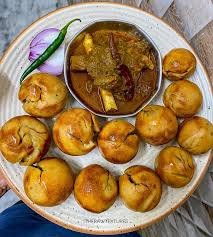
Mutton Litti: In many parts of Bihar, Litti is served with spicy mutton curry instead of Chokha, a combination that is a favorite during Sunday lunches.
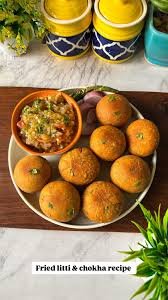
Fried Litti: For those who prefer a crunchier texture, Littis are deep-fried instead of roasted.
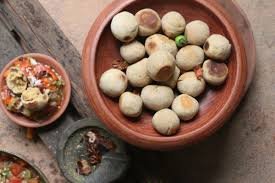
Sweet Litti: A lesser-known version where the stuffing consists of khoya (reduced milk) and nuts, served as a dessert.
Where to Find the Best Litti Chokha?
If you are traveling and want to experience the best Litti Chokha, here are some legendary spots:
- Patna, Bihar: Manoj Litti Bhandar at Fraser Road is a local legend, serving smoke-infused Littis for decades.
- Delhi NCR: Mr. Littiwala in Laxmi Nagar or the Bihar Stall at Dilli Haat offers a very authentic experience.
- Varanasi, UP: Look for street vendors near the Ghats; they often roast them on coal, providing the most authentic flavor.
Why Litti Chokha is Gaining Global Fame?
In recent years, the “Vocal for Local” movement and the rise of regional Indian cuisines have brought Litti Chokha into the international spotlight. Celebrity chefs like Ranveer Brar and Vikas Khanna have often showcased this dish as a prime example of India’s “slow food” culture. Its gluten-free potential (when made with alternative grains) and vegan-friendly nature (if ghee is replaced) make it highly adaptable to modern dietary trends.
Conclusion
Litti Chokha is not just food; it’s a journey through the heart of rural India. It represents the warmth of a village fire, the pungency of pure mustard oil, and the hospitality of the Bihari people. Whether you are a health enthusiast looking for a high-protein meal or a foodie searching for bold flavors, this dish never disappoints.
So, the next time you crave something authentic, skip the burgers and try making Litti Chokha at home. Your taste buds—and your health—will thank you!
“Have questions about Bihar’s food? Contact me here.”